
Tower Ridge, Perfect Weather
Posted by Max Hunter on 17th June, 2015
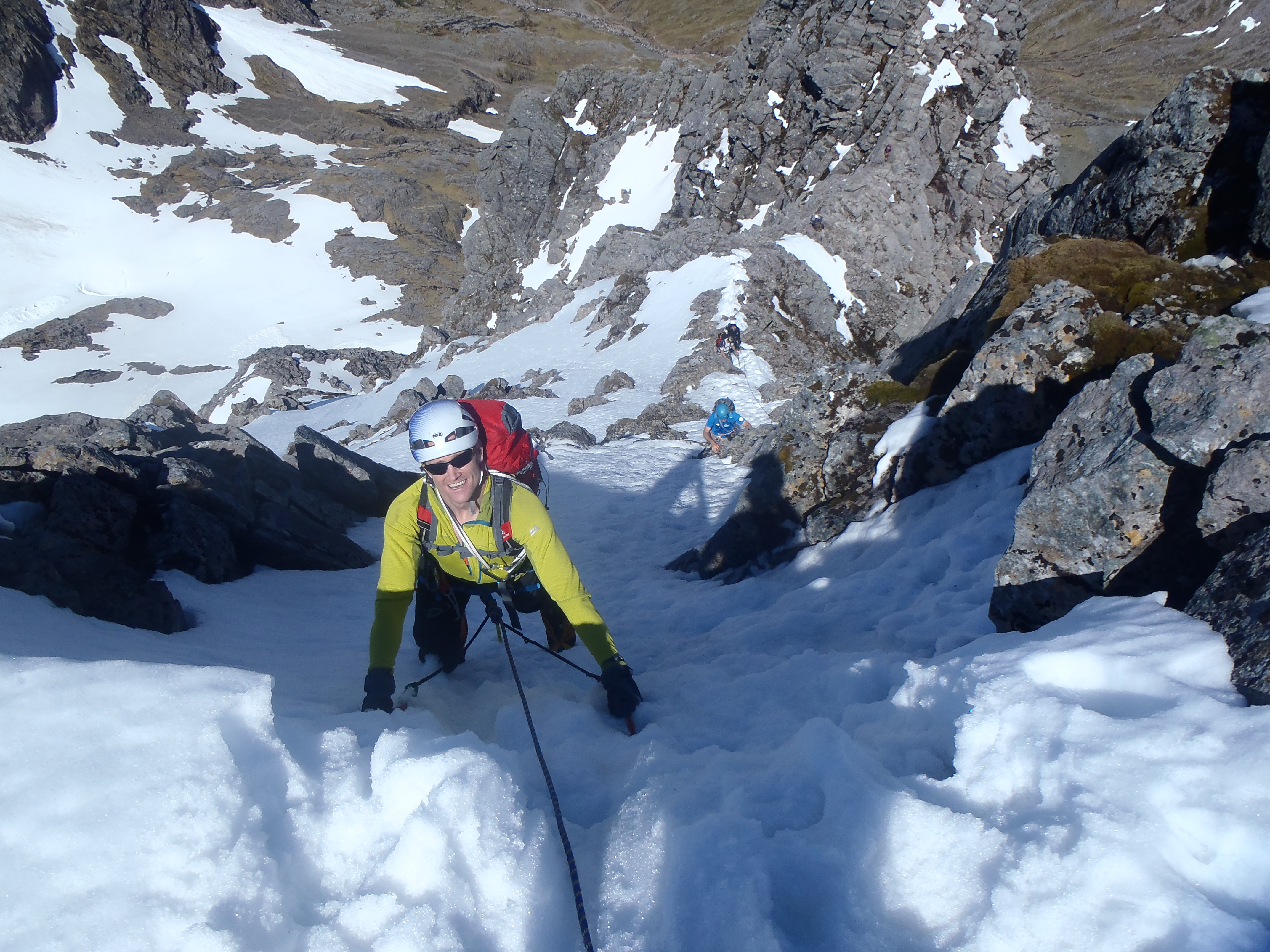
2 axes and crampons – the last pitch
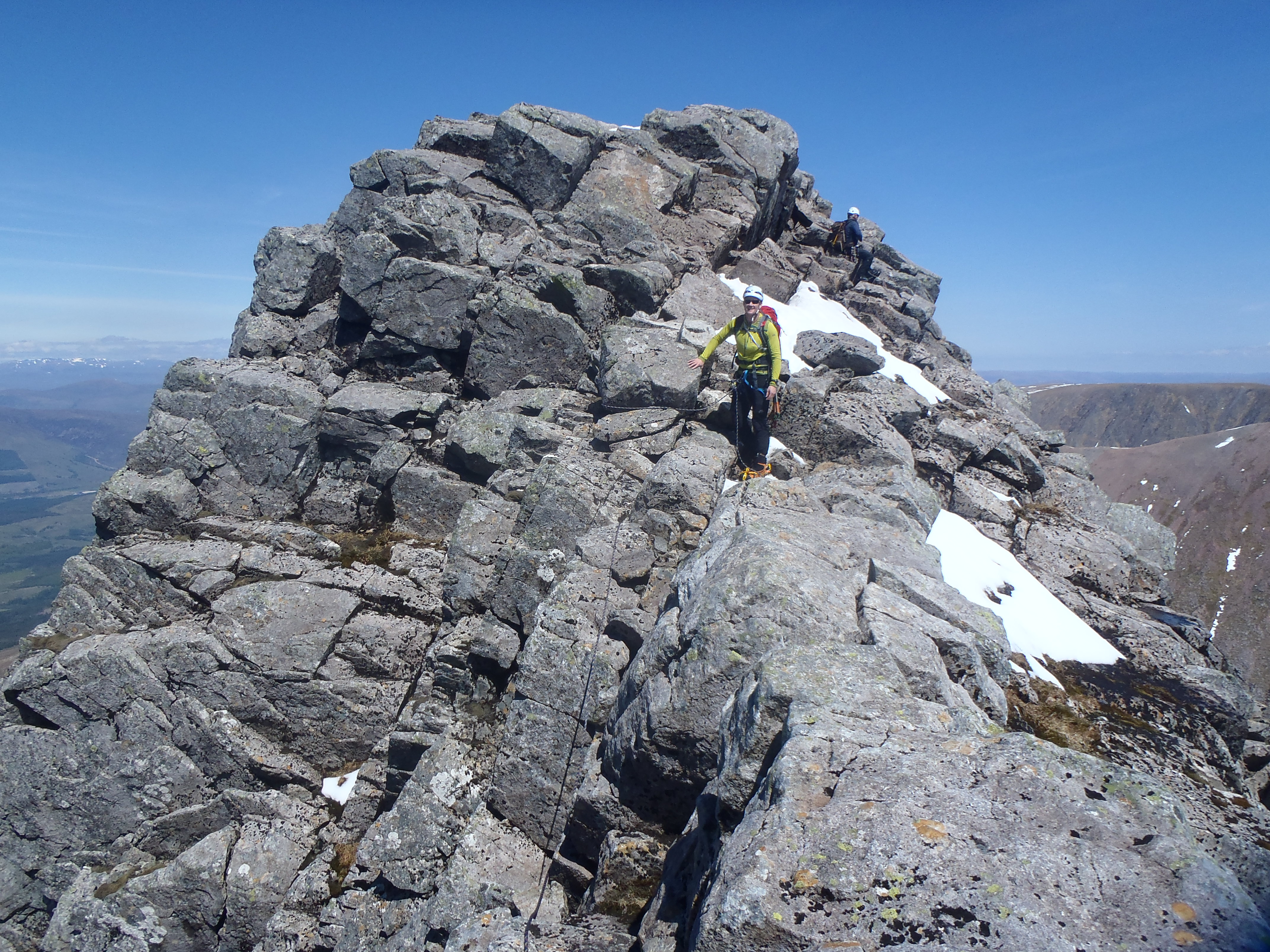
Davy approaching the Tower Gap
Hunter Mountaineering – Private Guiding
Last Friday, again with Davy, we wanted to take full advantage of the amazing weather so we thought we’d do Tower Ridge on Ben Nevis. The weather was perfect, dry, hot, no wind and clear skies all around. It was difficult to know what equipment to take, so we went for the safest option and took stiff boots, crampons, and 2 tools for the final pitch(s). I took a variety of layers in my bag too, but as it turned out, I was warm all day in a thin base layer t-shirt.
We started via the East gully to the Douglas gap, and found snow up to the gap, but it was easy to kick steps. We caught up with Jamie’s team at the Eastern Traverse, where they could see the pitch(s) ahead and advised us to put our crampons on. The traverse was semi snowed up. The cave/tunnel pitch afterwards was chocked with snow and the ramp on the right was very awkward, so we all went for the easy left by-pass. A few teams gathered waiting their turn at the Tower Gap, including Ali and his team of 2. After the gap, there was no snow until the final long pitch to the top, for which Davy and I were grateful for our crampons and 2 tools, which made life very simple (basically we used the tools because we had brought them all this way – 1 would have been fine. Many people in other teams did the final pitch with various assorted footwear, but I never regreted my decision of crampon compatible boots.
The quantity of snow at the top was amazing. There were still huge cornices about. The most scary sight was watching how close the tourists were getting to the edge of Tower Gully and Gardyloo Gully – if/when those snows break away and fall down the gullies, I’m certain that the worn tracks where people were walking would go down too! One of the 3 Gardyloo Gully cairns is almost completely buried by snow (1 rock sticking out only) – as an indication of the quantity of snow on the plateau.
On the way down we took a look at the top of Number 4 gully. There are still huge cornices with surface cracks many metres back from the edge.
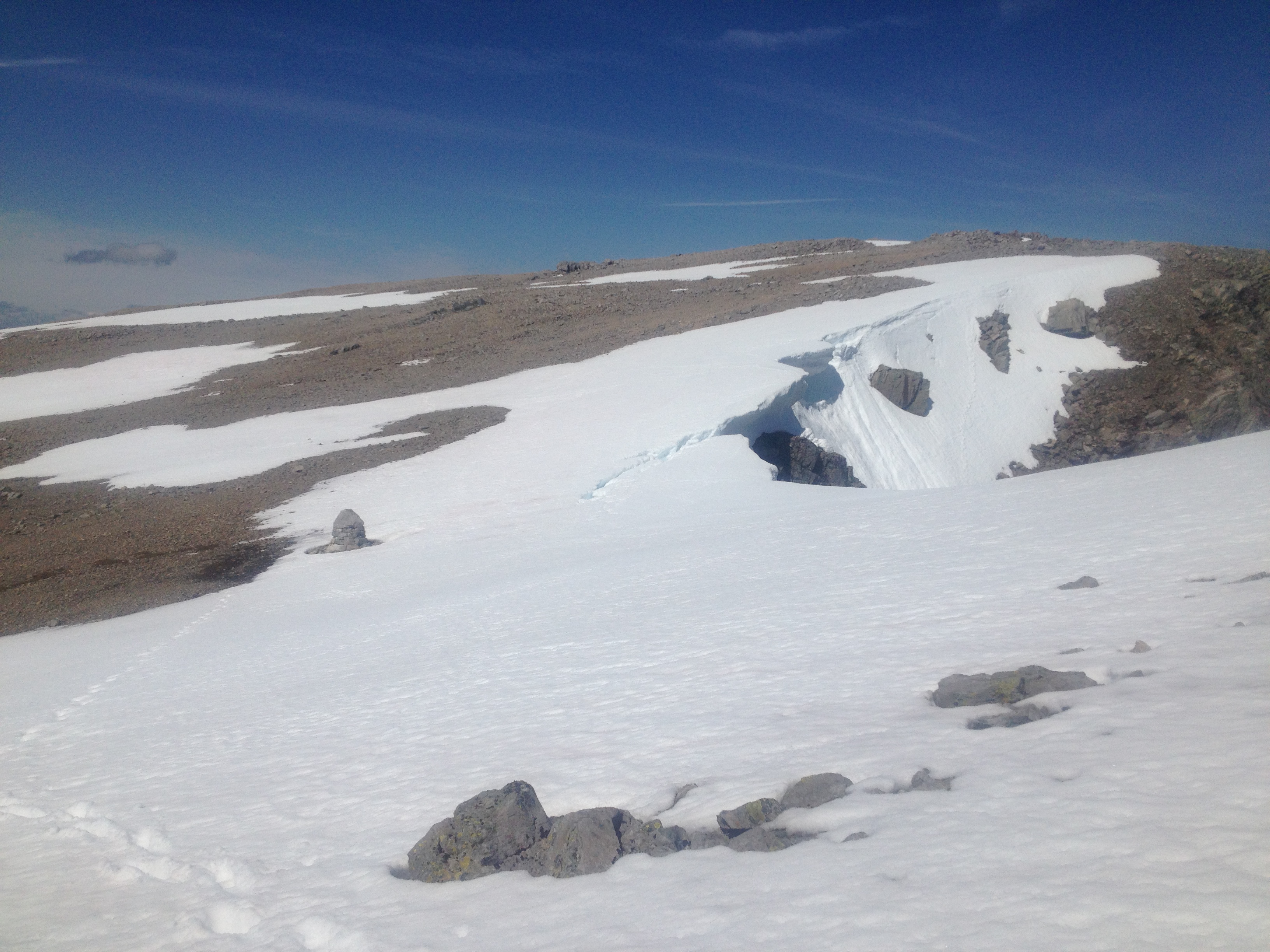
Number 4 Gully, and cracked cornice

Still huge cornices on all gully rims

Davy after Tower Gap
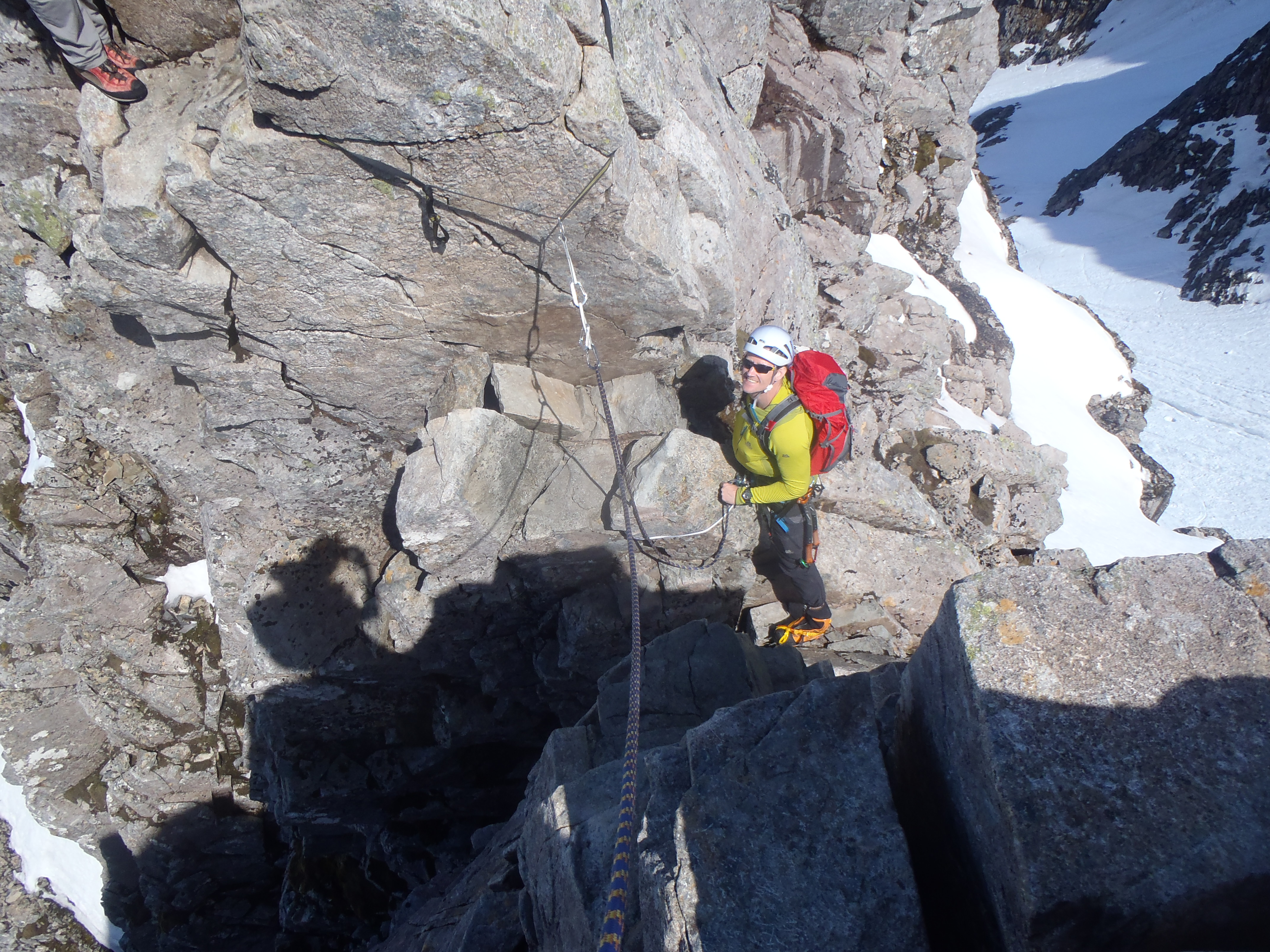
Davy in Tower Gap
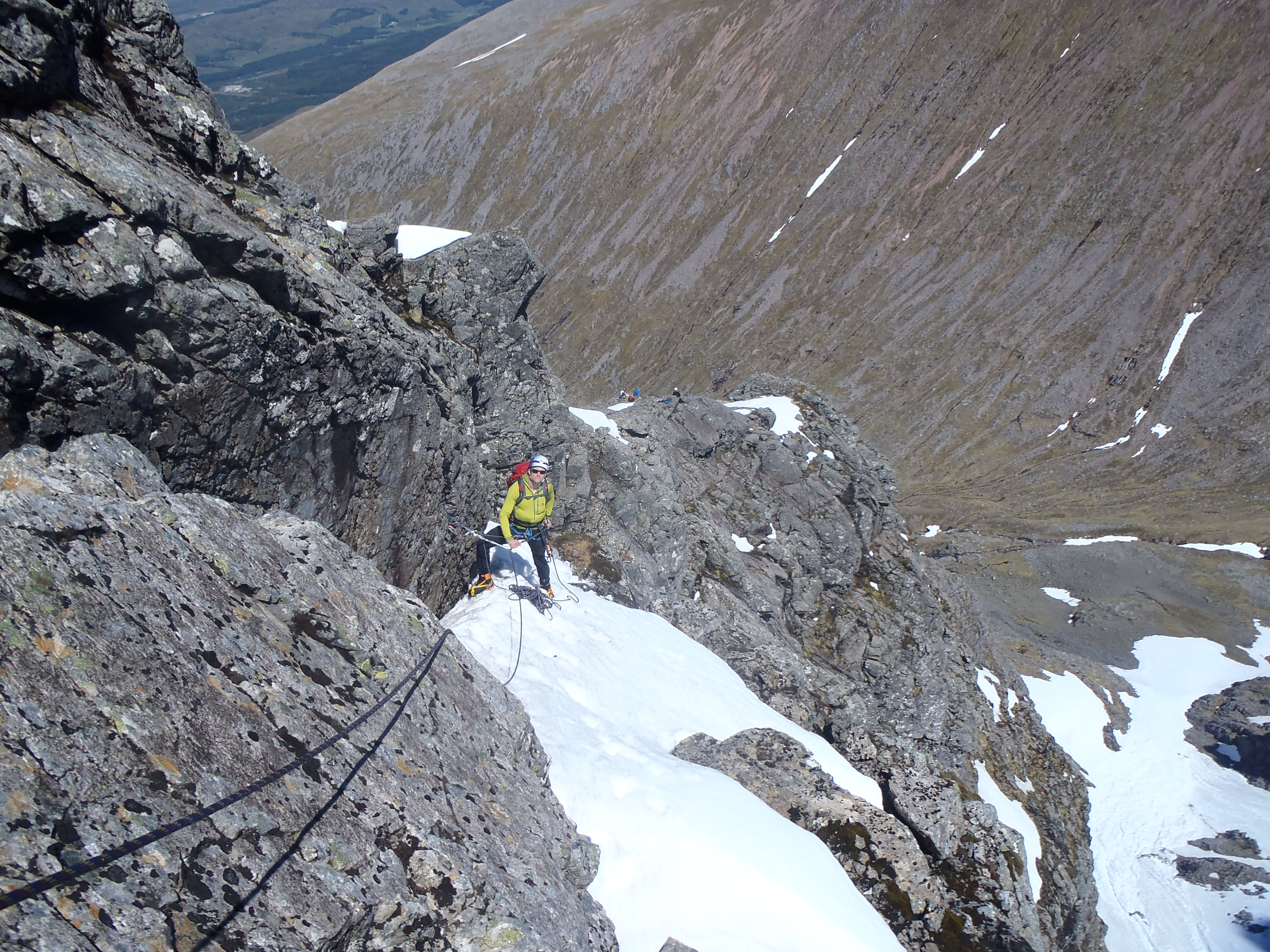
Left of the chocked ‘tunnel’ pitch
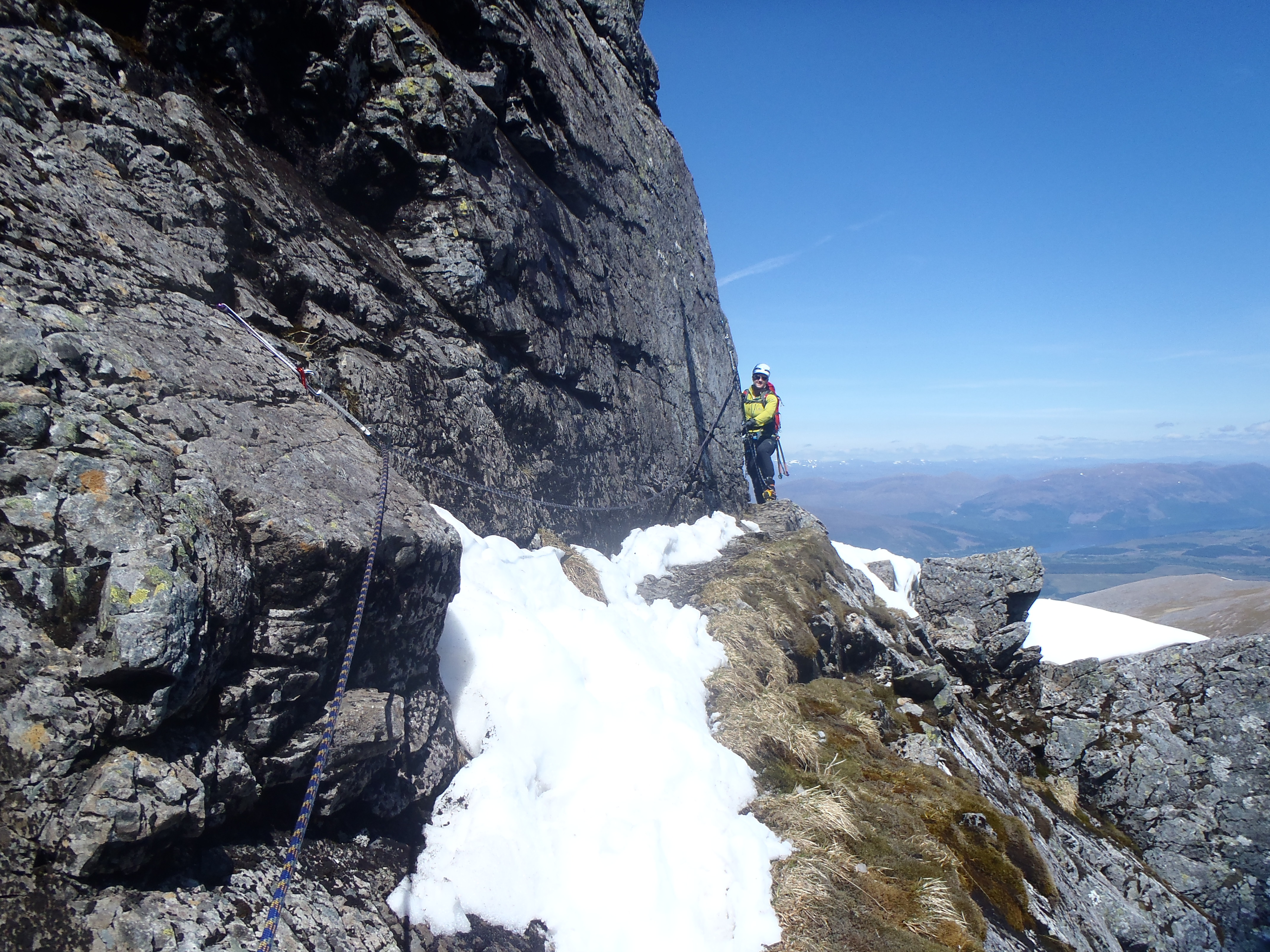
A very snowy Eastern Traverse

Davy on a patch of solid ice
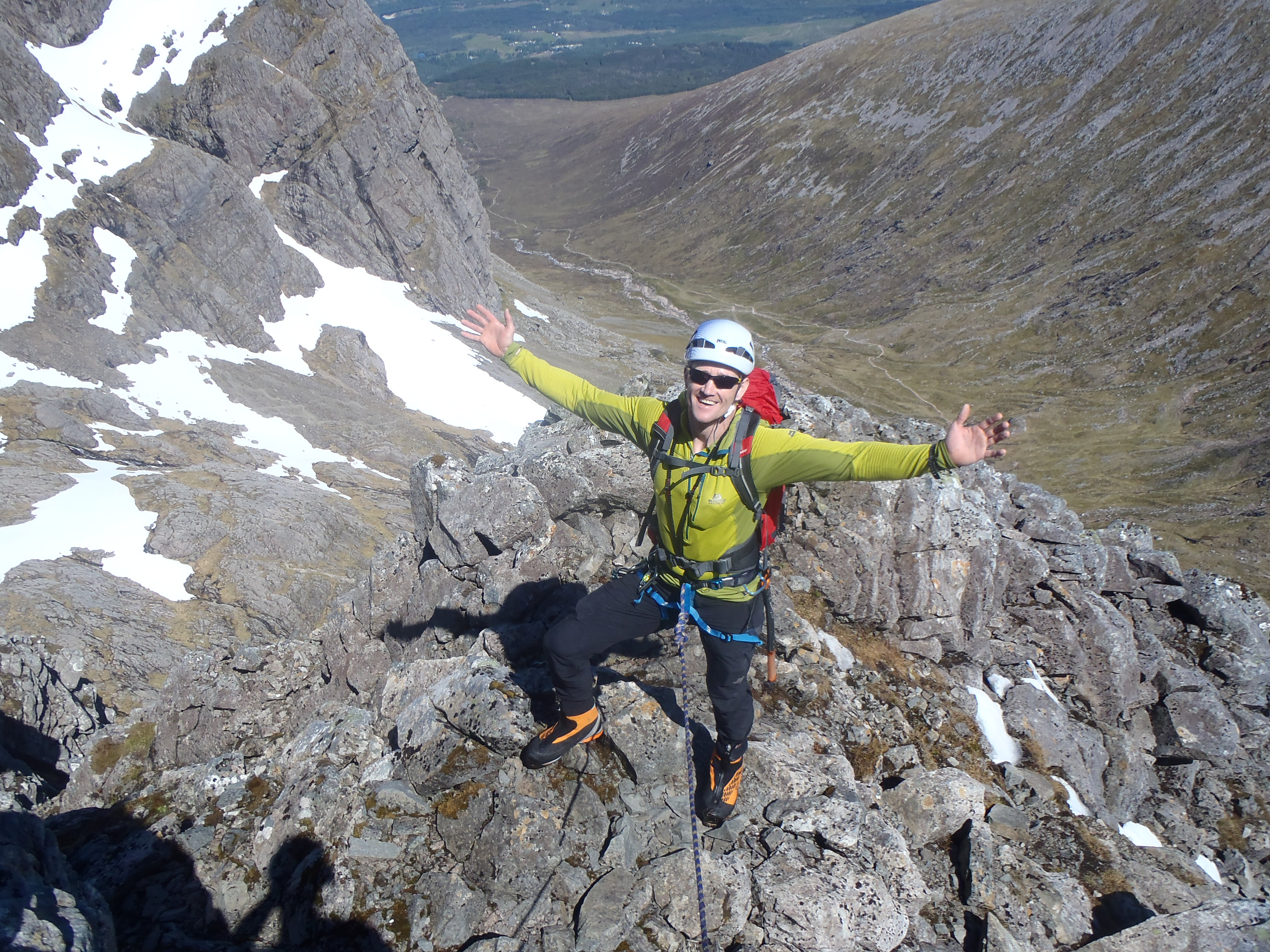
Davy happy in great weather
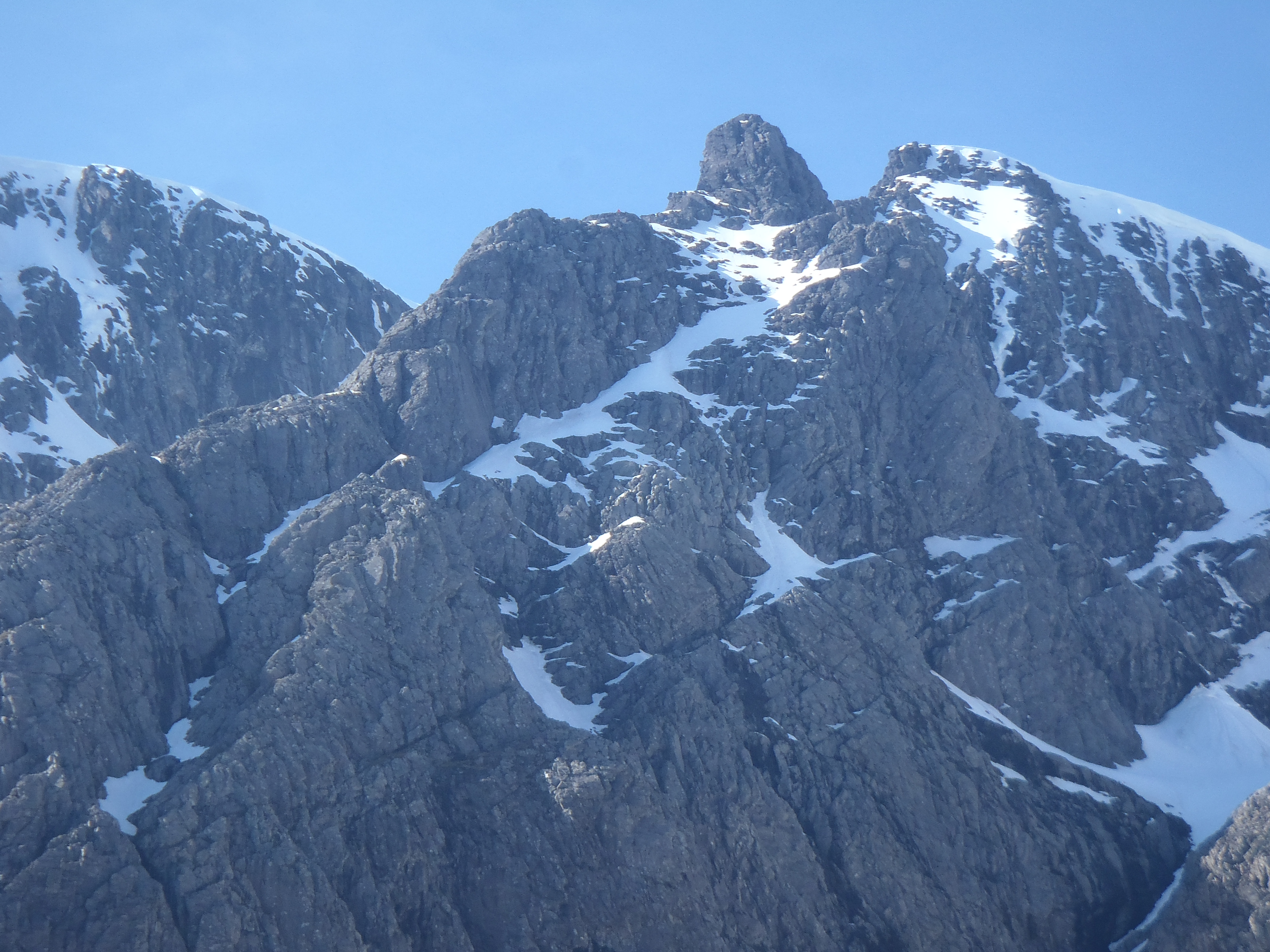
Tower Ridge – great Alpine conditions
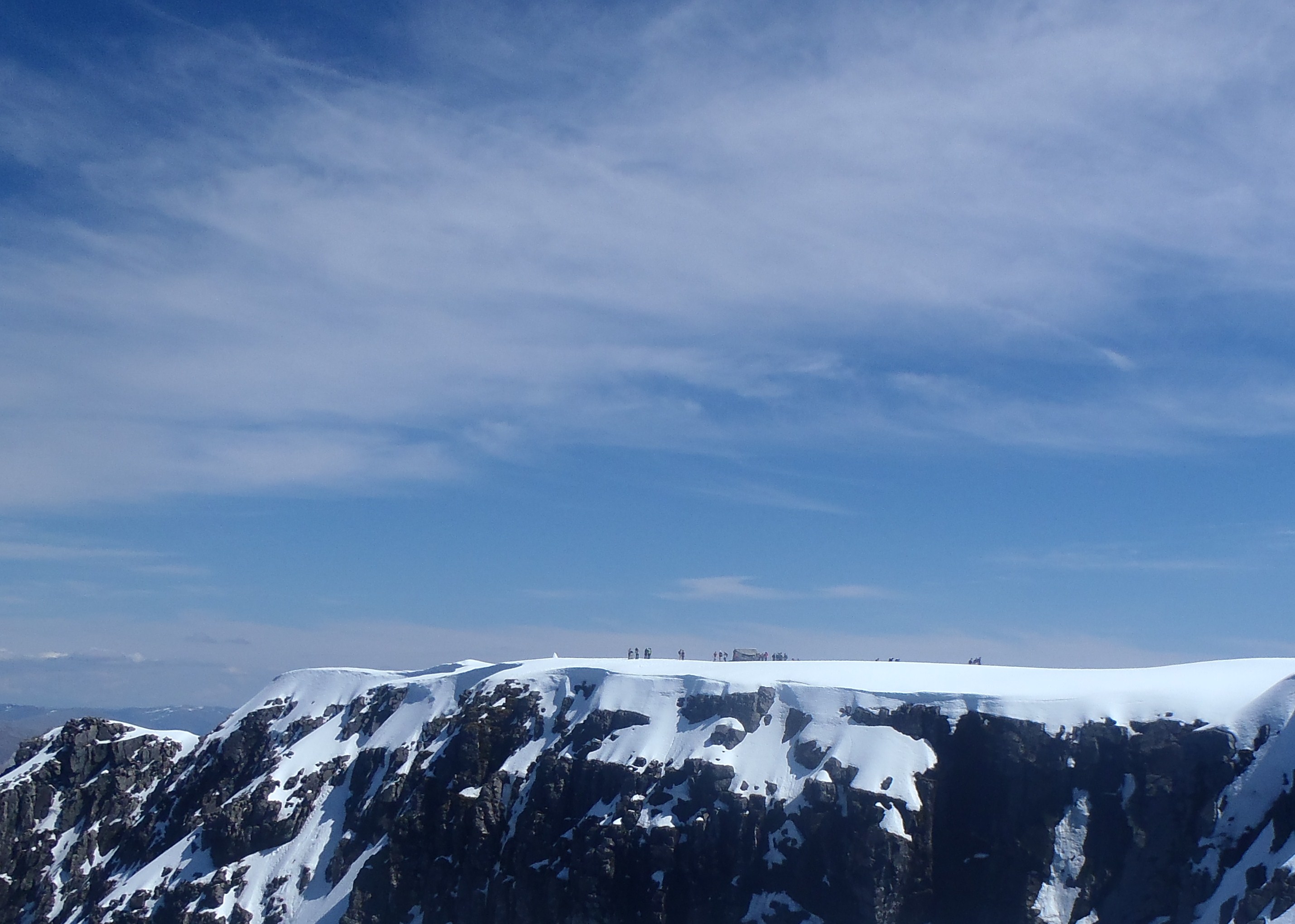
A busy Ben Nevis, snowy summit